
FREE WHITEPAPER
The Missing Input Modality for Smart Glasses
Capacitive touchpads misfire on sweat. Voice fails in public. Eye tracking drains the battery. This whitepaper makes the case for solid-state piezo buttons as the foundational tactile layer for smart glasses — and gives UX teams the design vocabulary to build interactions users understand the first time they put the glasses on. Ready to design the input layer your competitors are still debating? Let's get started.
Get instant access to the full 17-page whitepaper.
See exactly why every current input modality falls short — and what replaces them.
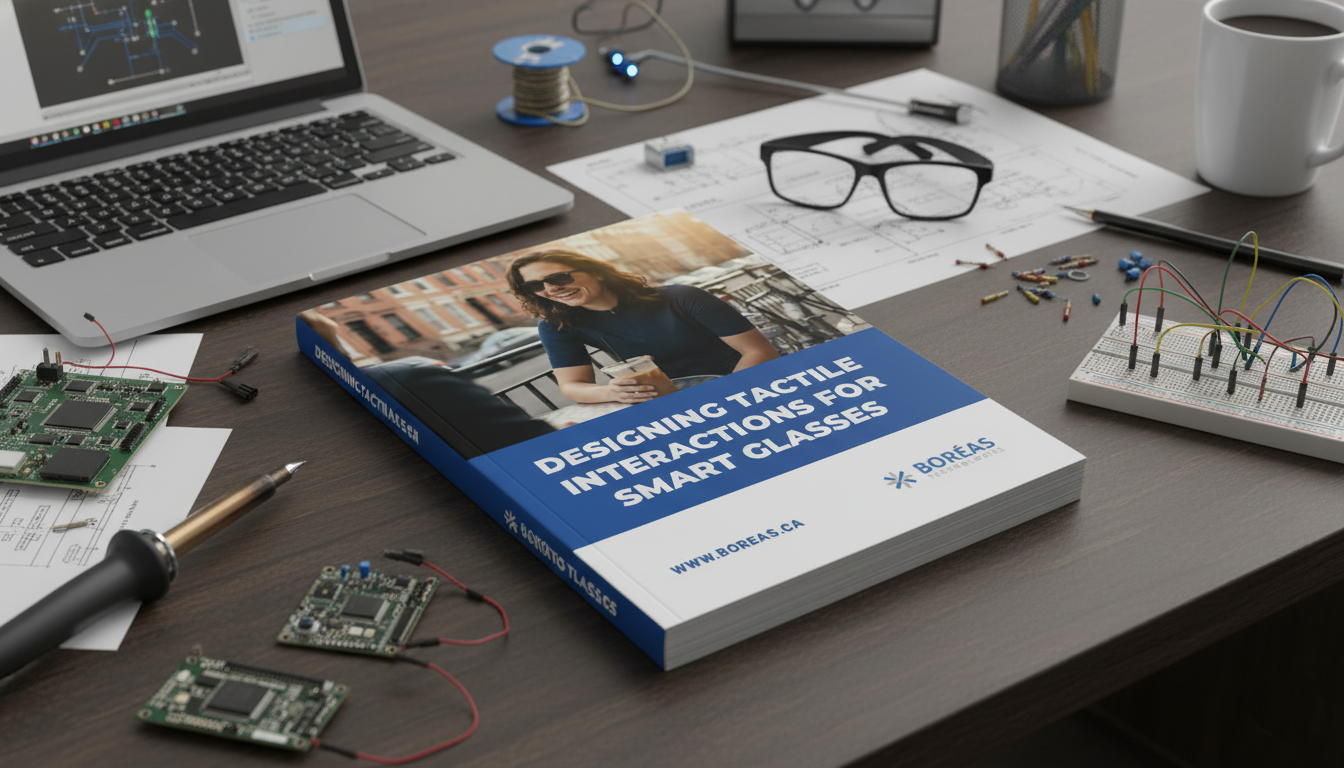
1- A Day in the Life of a Smart Glasses User
- Follow Maya, an urban cyclist, through the 200 milliseconds that decide whether smart glasses delight or disappoint
- Why capacitive, mechanical, voice, eye tracking and neural wristbands each fail at the moment that matters
2- What Solid-State Piezo Buttons Actually Are
-
Localized HD haptics: vibration contained to the fingertip, not the whole frame
- One chip, two jobs — how CapDrive® combines haptic driving and force sensing in a 2.1×2.5 mm package
3- A New Tactile Language for UX Designers
- Recreate the DSLR half-press/full-press camera gesture on a glasses temple
- Menu navigation, volume and zoom by feel — with haptic detents and terminal bumps, eyes free
4- The Boréas Blueprint: De-Risking Integration
- Proven in production: Framework Laptop 13 Pro, NIO vehicles, Dell flagships — 2.3M+ units shipped
- How a reference architecture turns months of integration iteration into weeks
Boreas Technologies, 2021